Most people judge a street or courtyard by how it looks on the day it opens. The real test comes a few years later. Has the paving stayed level, or have puddles and loose slabs appeared? Are the trees still healthy? Do people actually sit, play and walk there?
Public spaces are used heavily every day, and repairs disrupt everyone who lives nearby. Most of what makes them last is decided below the surface and at the planning stage, well before the finishes go down.
Paving that stays level
When paving settles unevenly or moves underfoot, the cause is almost always in the layers beneath it. A durable surface needs:
- A firm sub-base, laid and compacted in layers rather than in one thick pass, and made deeper wherever vehicles may cross.
- Solid kerbs and edge stones set in concrete. They hold the paving in place; without them, slabs and blocks slowly spread and the joints open.
- A gentle, even slope that carries rainwater to drains, channels or green areas instead of letting it soak into the base.
- Drain covers, manholes and edges set flush with the surface, so that nothing becomes a trip hazard.
Where footpaths are cast in concrete, reinforcing mesh and well-placed joints help the slab resist cracking as the ground settles and the seasons change.
Keep the mature trees
A mature tree gives shade from the sun and character that a newly planted tree needs decades to match, so it is usually worth working around it. Most harm to trees during construction happens to the roots: machines driving over them, soil compacted or heaped against the trunk, ground levels lowered or raised, trenches cut through the root zone. The damage may not show for several years.
The protection is simple but has to be enforced. Fence off the area around each tree before work starts, keep vehicles and stored materials out of it, dig by hand close to the roots, and set new paving levels to suit the existing ground around the trees rather than the other way round.
Trees and shrubs that survive the summer heat
New trees and shrubs fail most often in their first few summers, usually for lack of water. In Azerbaijan’s hot, dry months, green areas need a reliable irrigation line rather than occasional watering by hand. They also need enough good soil for roots to spread, edges that keep the soil in place and people off the beds, and species suited to the local climate. Young trees planted today will provide the shade of the future, provided they get through their first years.
Seating, shade and sport
People use spaces that give them somewhere to sit, some shade and something to do. A roofed shelter or a ring of seats under trees soon becomes a meeting point. Seating should be solid, comfortable and easy to maintain; stone and well-detailed timber both age well outdoors.
Sports areas need their own thinking: a level, well-drained surface, fencing high enough to keep the ball in, and a position that keeps play and noise away from windows and entrances where the site allows.
Working while residents use the space
Unlike a new building site, a courtyard or street usually stays in use throughout the works. That takes planning:
- Divide the work into phases so that entrances, footpaths and access for emergency vehicles stay open.
- Fence off active areas and keep a safe, clearly marked route around them.
- Agree working hours and delivery times that respect the people living nearby.
- Tell residents in advance what is happening, where and for how long.
- Leave the site tidy and safe at the end of each day.
Two recent projects
In Baku, our street and pavement improvement for Bakı Abadlıq Xidməti, completed in 2026, relaid pavements in stone paving with new kerbs, cast concrete footpaths over reinforcing mesh and added green areas with young plane trees.
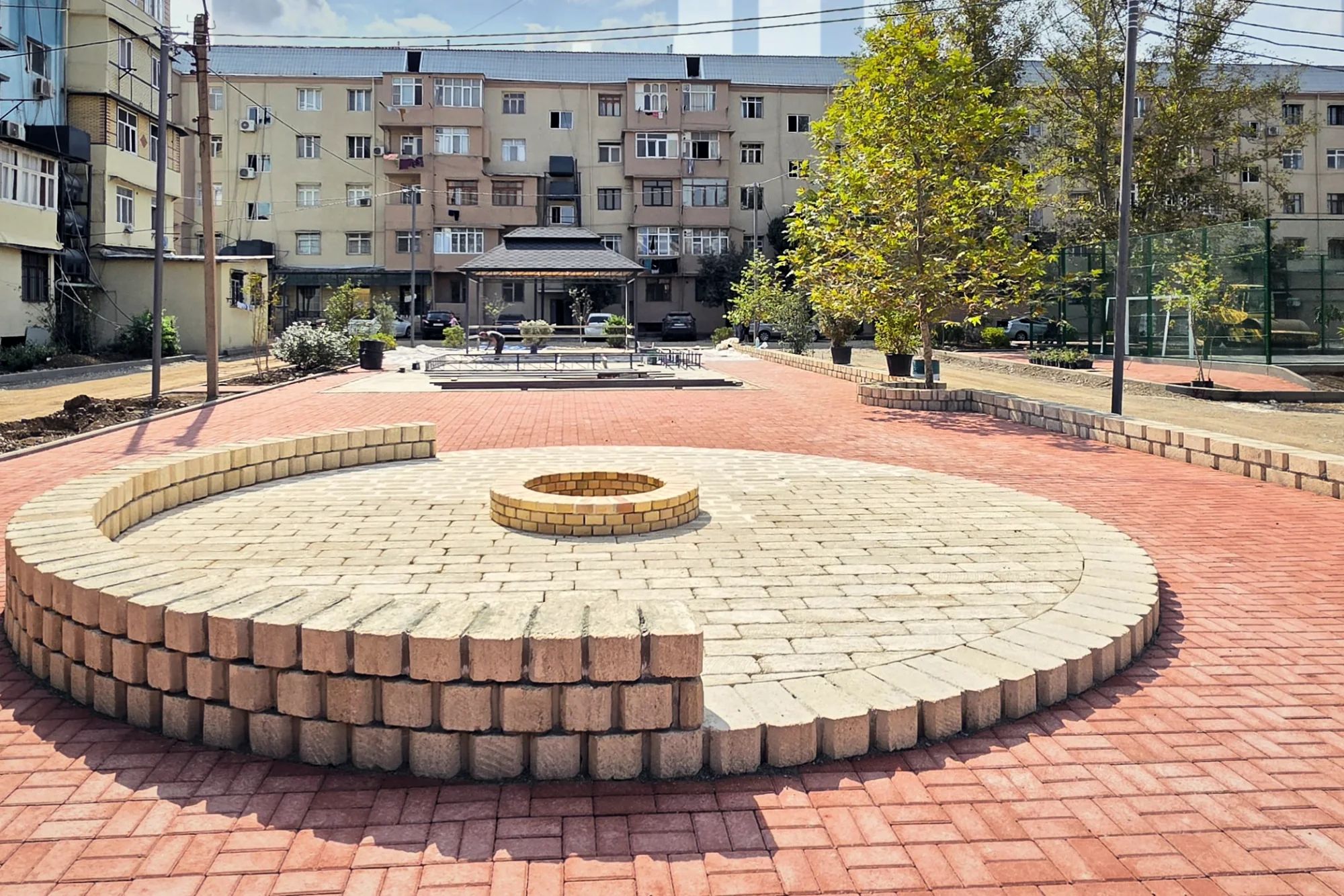
In Ganja, the courtyard and sports pitch we built for Ganja City Executive Power, also completed in 2026, brought red concrete paving with new kerbs, a roofed gazebo with a timber deck, a round stone seating area, green areas with an irrigation line, and a fenced mini football pitch among mature plane trees.